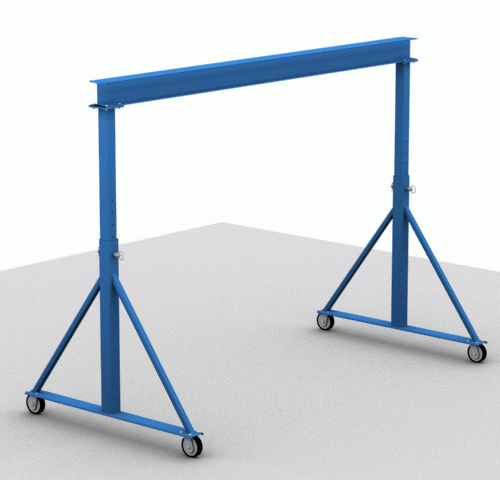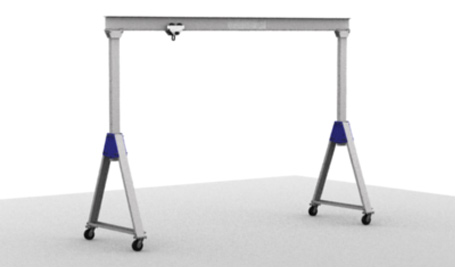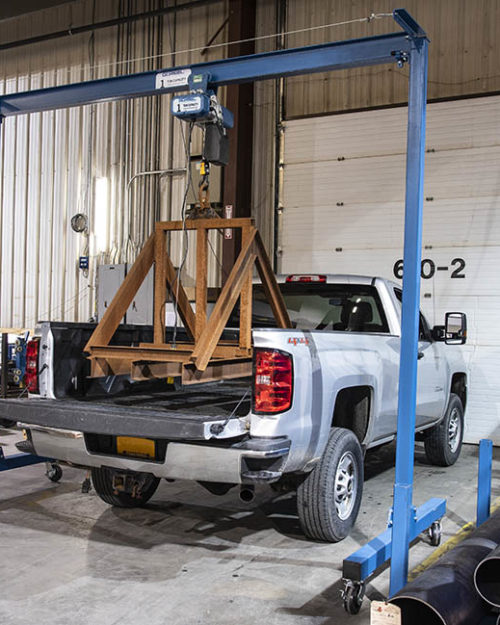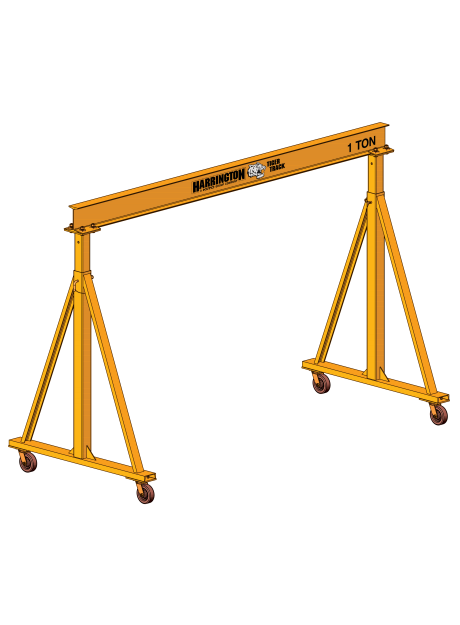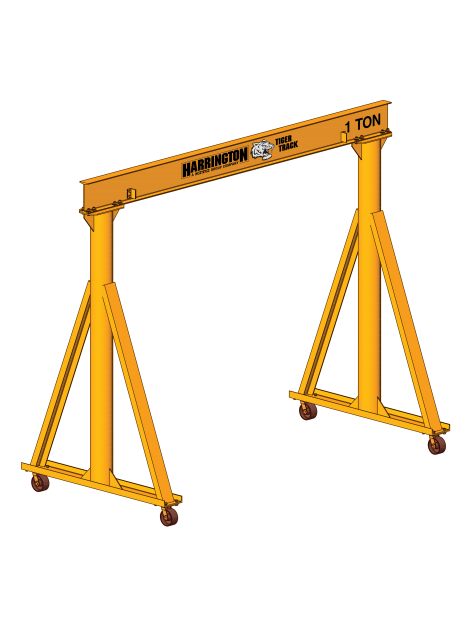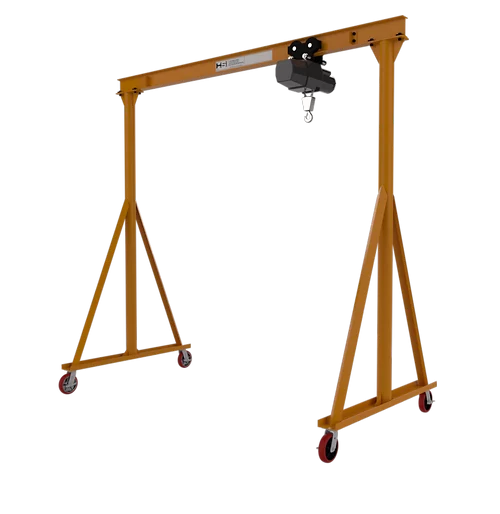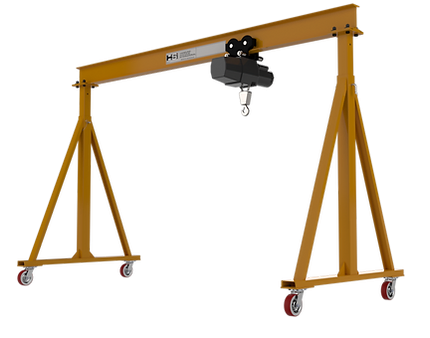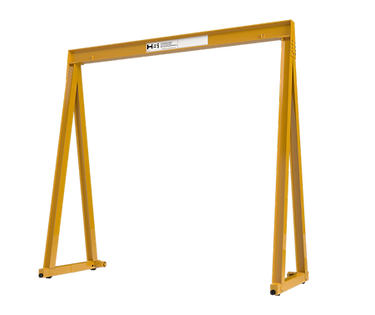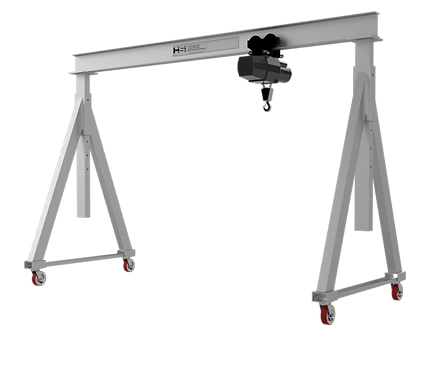
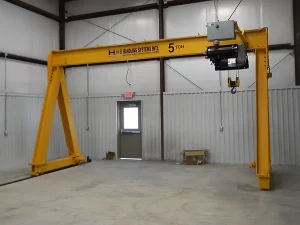
A gantry crane is a crane that is built on a gantry or portable frame, typically on wheels (though they can also come on tracks or rail systems). These cranes are highly versatile and can be used in smaller operations like automotive shops and large-scale operations.
Gantry cranes are available in a number of configurations. Motorized gantry cranes with track systems allow smooth positioning. On the other hand, trackless gantry cranes (motorized or manual) can be motorized or travel in any direction. Gantry cranes can also be single or double girder. Single girder cranes are great for lighter lifting requirements, and double girder models are ideal for high-capacity and more intensive operations.
Regardless of the type of gantry crane you choose, these cranes offer versatility and mobility, excellent lifting capabilities, higher efficiency, and cost effectiveness.
How does a gantry crane work?
Gantry cranes feature legs (two vertical supports on either side of the crane), a bridge (the main horizontal beam), a trolley (that moves along the bridge), a hoist (that lifts and lowers the load), and a track or casters (which move the whole structure).
This system supports both vertical and horizontal movement. The hoist, attached to the trolley, lifts and lowers while carrying heavy objects as needed. The trolley can move horizontally across the bridge, while the entire crane and support can move horizontally along the track or casters.
What are the benefits of a gantry crane?
Gantry cranes move on wheels, tracks, or rail systems, which means they’re completely mobile. Additionally, they’re not permanent structures, so they can be assembled relatively quickly compared to other cranes that require foundations or permanent installation. Lastly, gantry cranes are extremely customizable, meaning you can choose the height, span, and wheels or casters that meet your needs.
A gantry crane is a type of overhead lifting system supported by legs that run on wheels or rails, allowing it to move loads horizontally across a workspace without needing a permanent building structure.
A gantry crane uses a hoist mounted on a horizontal beam (girder) to lift and move materials. The entire structure can travel along the ground on wheels or tracks for flexible load handling.
Gantry cranes are commonly used for lifting and transporting heavy materials in warehouses, construction sites, shipyards, manufacturing plants, and outdoor storage yards.
Common types include:
A gantry crane is supported by legs and does not require building support, while an overhead crane is mounted to a building’s structure or runway beams.
Gantry cranes can range from light-duty models lifting a few hundred pounds to heavy-duty systems capable of lifting hundreds of tons, depending on design and configuration.
Yes, many gantry cranes are designed to be portable with casters or wheels, making them ideal for flexible workspaces and temporary lifting applications.
Industries include:
A portable gantry crane is a lightweight, movable crane system that can be easily repositioned and is often used for maintenance, workshops, or smaller lifting tasks.
Yes, gantry cranes are commonly used outdoors and can be designed to withstand weather conditions, especially in shipping yards and construction environments.
An RTG crane is a mobile gantry crane that runs on rubber tires instead of rails, commonly used in container yards for stacking and moving shipping containers.
An RMG crane operates on fixed rails and is typically used in ports and intermodal terminals for high-capacity container handling.
Key components include:
Gantry cranes can be controlled using:
Common safety features include:
Benefits include:
Key factors include:
Yes, regular inspections and maintenance are necessary to ensure safe operation, including checking hoists, wheels, structural components, and electrical systems.
With proper maintenance, gantry cranes can last 20+ years depending on usage, environment, and build quality.
Yes, gantry cranes can be customized for specific applications, including span width, lifting height, capacity, and specialized controls or automation features.