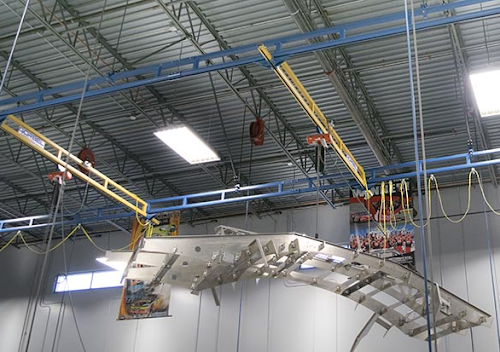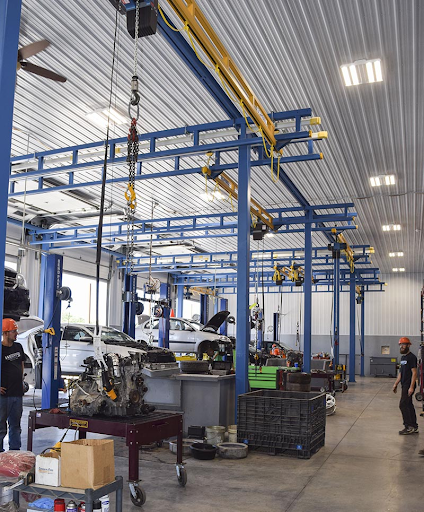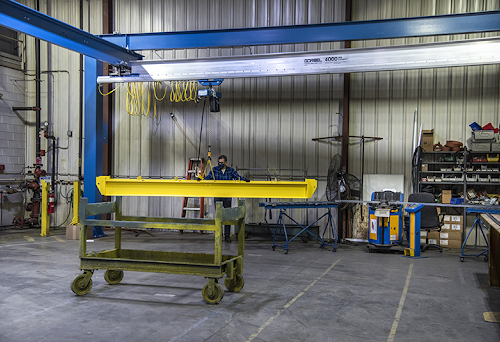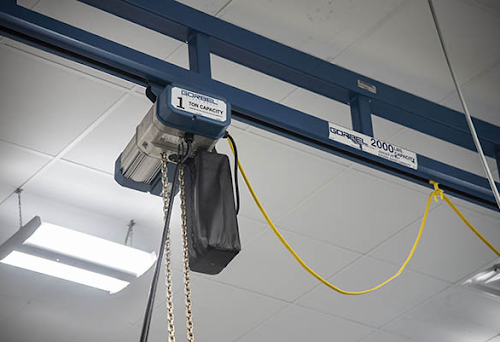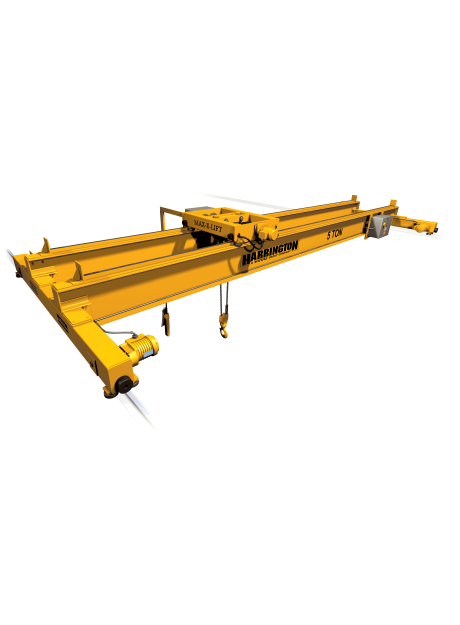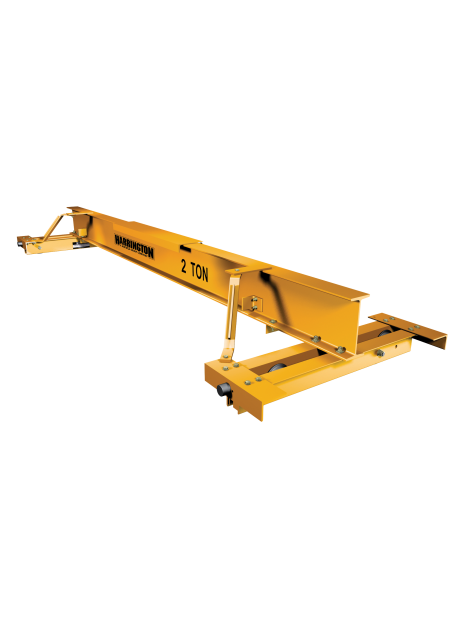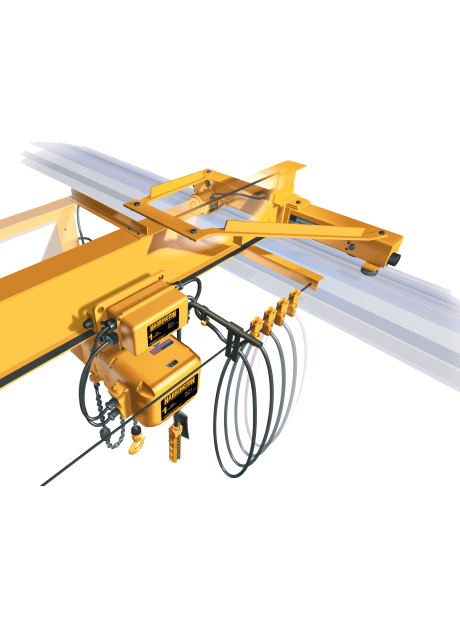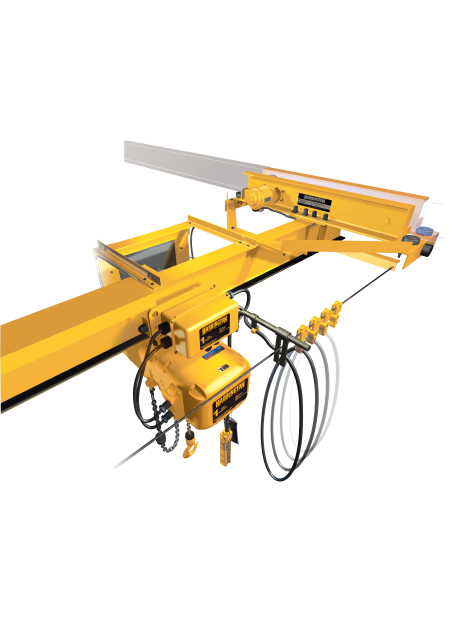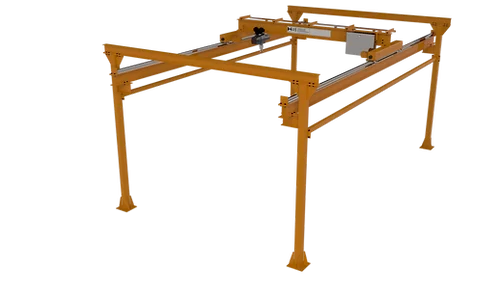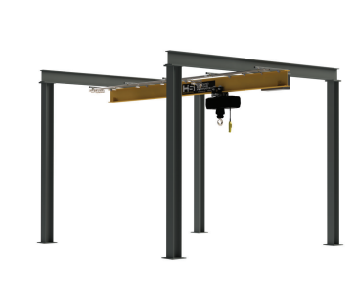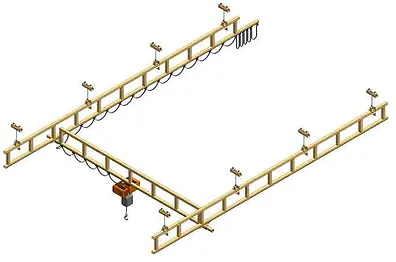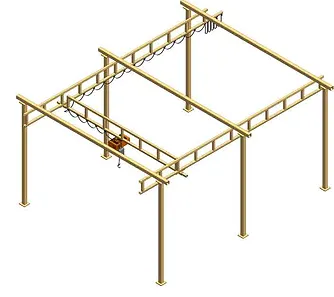
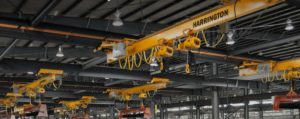
 Overhead bridge cranes are heavy duty material handling equipment. They allow for heavy material to be moved in all three axis within the bridge span. The bridge crane travels along an overhead runway system consisting of two parallel beams. These can be standalone or part of the existing structure. The trolley and hoists travel along the bridge itself.
A bridge crane is an overhead lifting system that uses one or two horizontal girders supported by end trucks that travel along runway beams to move loads throughout a facility.
A bridge crane works by moving a hoist and trolley across a horizontal bridge while the entire crane travels along runway beams, allowing loads to be lifted and positioned in multiple directions.
Bridge cranes are used to lift, move, and position heavy materials in manufacturing plants, warehouses, fabrication shops, steel mills, and other industrial environments.
Common types of bridge cranes include single girder bridge cranes, double girder bridge cranes, top running bridge cranes, and underhung bridge cranes.
A bridge crane runs on elevated runway beams attached to a building or support structure, while a gantry crane is supported by legs that move along the floor on wheels or rails.
A single girder bridge crane uses one main beam and is often used for lighter capacities, while a double girder bridge crane uses two beams for higher capacities, longer spans, and greater hook height.
Bridge cranes can support capacities from a few hundred pounds to hundreds of tons, depending on the crane design, structure, and application.
Industries that use bridge cranes include manufacturing, automotive, aerospace, steel production, warehousing, construction, and heavy equipment assembly.
A top running bridge crane travels on rails mounted on top of runway beams, making it a good option for higher capacities and maximum lifting height.
An underhung bridge crane is suspended from the bottom flange of the runway structure, making it useful in facilities with lighter loads and limited headroom.
Yes, bridge cranes can be customized based on capacity, span, lift height, runway configuration, hoist type, controls, and duty cycle requirements.
Bridge cranes can use electric chain hoists, wire rope hoists, manual hoists, or specialized lifting devices depending on the load and operating environment.
Common safety features include overload protection, limit switches, emergency stop controls, warning systems, collision avoidance devices, and secure operator controls.
Yes, bridge cranes can improve workplace safety by reducing manual lifting, improving load control, lowering the risk of damage, and helping move heavy materials more efficiently.
Yes, bridge cranes typically require a building structure or independent support columns with runway beams to support crane travel and load movement.
Yes, bridge cranes can often be installed in existing buildings if the structure can support the crane system or if independent support columns are added.
Yes, bridge cranes require regular maintenance, including inspections of the hoist, trolley, bridge, runway, electrical systems, controls, and structural components.
With proper maintenance and correct operation, bridge cranes can last 20 years or more depending on the environment, usage, and duty cycle.
Advantages of bridge cranes include efficient overhead lifting, full use of facility floor space, high load capacities, precise load positioning, and improved workflow.
Choosing the right bridge crane depends on load capacity, span, lift height, headroom, building support, duty cycle, hoist type, and the specific needs of the application.